
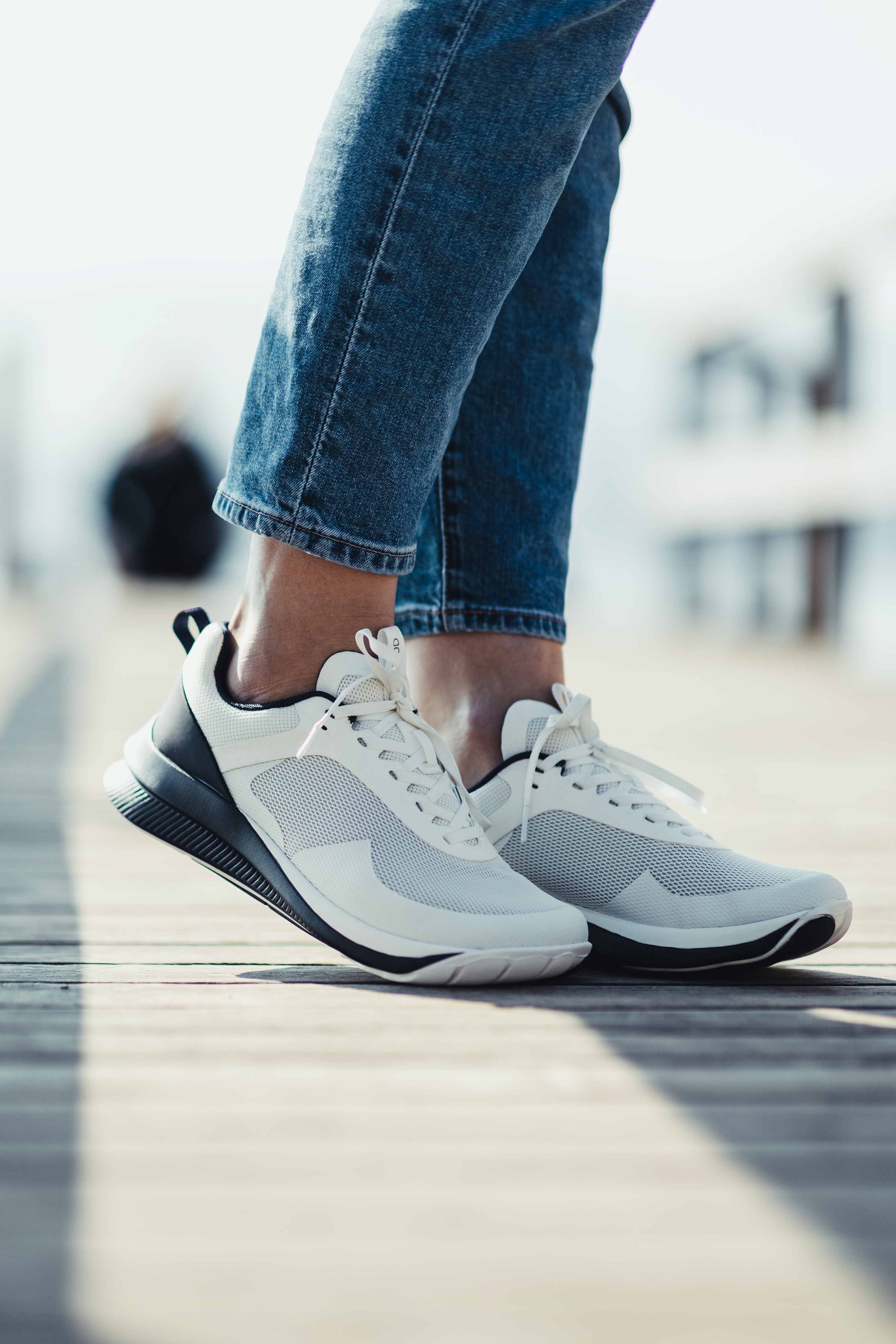
Fifty years ago, sneakers were for gym class and nothing else. You wore them to run, maybe to play tennis. Then you changed into real shoes. Loafers, oxfords, boots — something leather, something grown-up.
Today, sneakers are worn with suits, dresses, and everything in between. CEOs wear them to board meetings. Brides wear them down the aisle. The President of the United States has been photographed in sneakers more times than in dress shoes.
How did the most casual shoe become the most universal shoe?
The Three Revolutions That Made Sneakers King
Revolution 1: The Running Boom (1970s)
In the 1970s, millions of ordinary people started running. Not athletes. Not Olympians. Regular people, jogging through neighborhoods in shorts and sneakers. For the first time, athletic shoes were worn by non-athletes for non-competitive reasons.
Nike, founded in 1964 as Blue Ribbon Sports, grew into a giant by selling to these new runners. The sneaker became a symbol of health, freedom, and self-improvement. It was no longer just gym equipment.
Revolution 2: Hip-Hop and Streetwear (1980s–1990s)
When hip-hop emerged from New York City, it brought a new fashion language. Sneakers were central. Not just any sneakers — specific ones. Adidas Shell Toes. Nike Air Force 1s. Run-DMC recorded “My Adidas” and changed footwear forever.
For the first time, sneakers were status symbols. Rare releases sold out in hours. People waited in line overnight. A sneaker could cost $200, then $500, then $1,000 on the resale market. The shoe became art, investment, and identity all at once.
Revolution 3: The Luxury Sneaker (2010s–present)
Then luxury brands noticed. Balenciaga released the Triple S — a massive, exaggerated sneaker that cost $850. Gucci, Prada, and Louis Vuitton followed. The sneaker had conquered the last frontier: high fashion.
Meanwhile, sneaker collaborations became cultural events. Virgil Abloh’s Nike “The Ten” collection. Kanye West’s Yeezys. Travis Scott’s backwards Swoosh. Each release generated billions of dollars and millions of headlines.
Why Sneakers Won
| Old Rule | New Rule |
|---|---|
| Sneakers are casual | Sneakers are versatile |
| Sneakers are for exercise | Sneakers are for expression |
| Dress shoes show success | Rare sneakers show success |
| Comfort is lazy | Comfort is smart |
| One pair of sneakers is enough | Collecting sneakers is a hobby |
The shift reflects a broader cultural change. Workplaces became less formal. Remote work exploded. People started valuing how clothes felt, not just how they looked. The sneaker was perfectly positioned: comfortable enough for all day, stylish enough for almost any setting.
The Sneaker You See Everywhere (And Why)
The Nike Air Force 1 is the best-selling sneaker of all time. Designed in 1982, it has never stopped production. Why has it lasted forty years?
- It is neutral – White on white goes with everything
- It is simple – Clean lines, no aggressive technology
- It is affordable – Around $100, not $1,000
- It is unisex – Worn by all genders, all ages
- It is blank – A canvas for customization, from marker drawings to $10,000 diamond lace locks
The Air Force 1 is not the best sneaker. It is the most democratic sneaker. And that is its power.
How to Choose Sneakers That Work (Without Becoming a Collector)
You do not need twenty pairs. You need three.
The White Leather Sneaker
Common Projects, Koio, or a clean affordable option like Adidas Stan Smith. Worn with jeans, chinos, shorts, even some suits. The foundation of any sneaker wardrobe.
The Running Sneaker
Hoka, New Balance, or On. Worn for actual exercise, but also for airport days and long walks. Prioritize comfort over style here.
The Statement Sneaker
Something with color, texture, or personality. Maybe a retro basketball shoe. Maybe a collaboration piece. Worn when you want your feet to start the conversation.
The Resale Market: A Quick Warning
Rare sneakers are now traded like stocks. Apps like StockX and GOAT let anyone buy and sell. Prices swing wildly. A $200 sneaker released in limited numbers can reach $1,000 within hours.
Some people make money doing this. Most people do not. If you are buying sneakers to wear, ignore the hype. Buy what you like at a price that does not hurt. If you are buying sneakers to invest, remember: sneakers are not stocks. They can yellow, crack, and lose value. And the hype can disappear overnight.
The Environmental Cost
The sneaker industry produces roughly 20 billion pairs of shoes per year. Most end up in landfills. Sneaker materials — rubber, foam, plastic, glue — do not biodegrade. Some brands are trying to change this. Adidas makes shoes from ocean plastic. Allbirds uses wool and sugarcane. Veja uses wild rubber from the Amazon.
If you care about sustainability, buy fewer sneakers. Buy used sneakers. Buy sneakers made from natural materials. And wear them until they fall apart.
The Bottom Line
The sneaker is not a trend. It is the defining shoe of our era. Casual, comfortable, collectible, and — at its best — a genuine form of self-expression.
Fifty years ago, sneakers were hidden in lockers and changed out of as quickly as possible. Now they are worn to weddings, funerals, and presidential inaugurations. The sneaker won. The dress shoe lost. And your feet have never been happier.